Socio-economic impact assessment for carbon, conservation and development projects, including community baselines, livelihoods, stakeholder engagement, social safeguards and benefit monitoring.
KMS provides comprehensive evaluation services that examine the potential impacts of a proposed project, policy or development on both the natural environment and the socio-economic conditions of affected communities. A socio-economic and environmental assessment typically includes baseline data collection, such as assessing the current state of the natural environment, including air quality, water resources, biodiversity and soil quality, as well as assessing the existing socio-economic conditions of communities likely to be affected by the project, including demographics, livelihoods, health, education, income levels and cultural aspects.
The community side of a carbon project
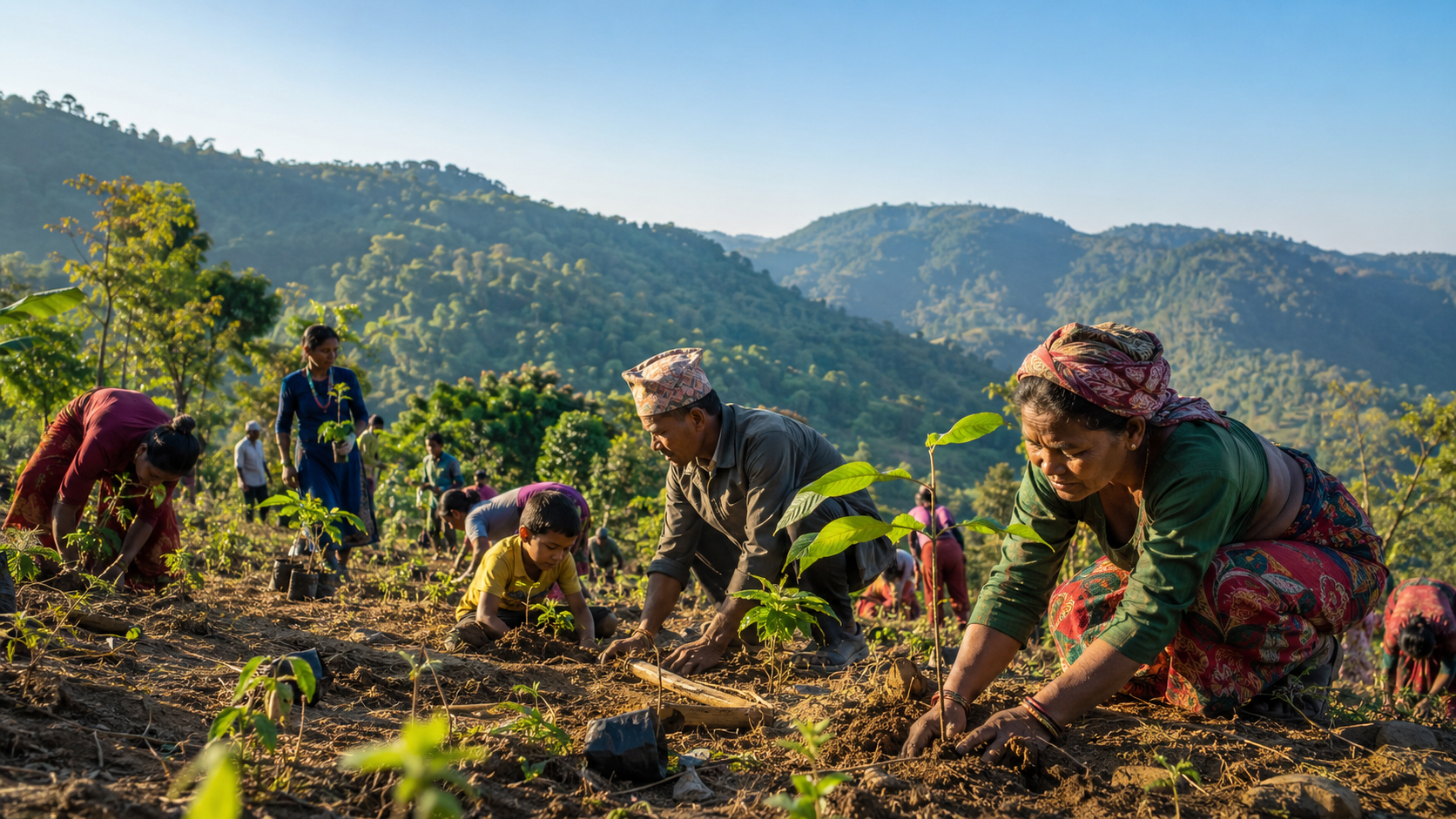
Carbon projects do not happen in empty landscapes. People live on and around the land. The best standards now require a project to show it helps those communities, not just store carbon. Verra’s CCB Standard certifies community benefits alongside climate and biodiversity, which is what lets a project carry the CCB label and credible SDG co-benefit claims on its carbon credits. Plan Vivo is built around livelihoods. Buyers and funders increasingly look for verified social benefits and place higher value on the credits that carry them. A socio-economic assessment is the evidence base that turns a claim of community benefit into something a verifier accepts.
How KMS approaches socio-economic assessment
Kanaka Management Services (KMS Group) assesses the environment and the community together, because in a land based project they cannot be separated. The work starts with two baselines, the environmental one covering air, water, soil and biodiversity, the social one covering the demographics, livelihoods, health, education and income of affected communities. From there we assess how a project will affect both, run the stakeholder consultation that gives communities a real voice and map outcomes against the standards and SDGs a project wants to claim. We also set up monitoring, so the social benefits can be tracked over the project’s life rather than asserted once.
Done properly this protects a project twice. It surfaces social and environmental risks early, before they become problems. And it builds the documented community benefit that strengthens credit quality and buyer confidence. For projects under CCB, Plan Vivo or any standard with a community requirement, this is not optional. It is the part that proves the project is fair.
Socio-economic work is the community pillar of a land based project. It sits beside forest carbon surveys on the climate side and biodiversity assessments on the nature side, the three things the CCB Standard certifies together. Where land and resource use are central it also feeds into natural resource management. For how these pieces fit, see our carbon credit knowledge hub.
Frequently asked questions
What is a socio-economic assessment?
A socio-economic assessment evaluates how a project, policy or development affects both the natural environment and the people around it. It collects baseline data on the environment (air, water, soil, biodiversity) and on communities (demographics, livelihoods, health, education, income), then assesses the likely impacts. The result guides decisions and proves a project’s social effects.
Why do carbon projects need socio-economic assessments?
The leading standards require projects to demonstrate community benefit, not just carbon. Verra’s CCB Standard certifies community co-benefits and Plan Vivo is built around livelihoods. Buyers and funders increasingly value credits backed by verified social benefits. A socio-economic assessment is what proves those benefits to a verifier instead of just claiming them.
What does a socio-economic assessment measure?
Two baselines. The environmental baseline covers air quality, water resources, soil and biodiversity. The social baseline covers demographics, livelihoods, health, education, income and cultural factors. The assessment then looks at how the project changes each and at the risks and benefits for affected communities.
What is the difference between social impact assessment and environmental assessment?
They answer different questions and work best together. Environmental assessment looks at effects on air, water, soil and biodiversity. Social or socio-economic assessment looks at effects on people: livelihoods, health, income and culture. In a land based carbon project both matter, because the project touches the ecosystem and the community at the same time.
How does KMS assess community benefits and risks?
KMS builds environmental and community baselines, runs stakeholder consultation so communities have a say, assesses the project’s likely impacts and maps the outcomes against standards like CCB and the SDGs. Monitoring is set up from the start, so social benefits are tracked over the project’s life rather than asserted once.
Talk to a KMS carbon consultant
Need to prove the community and livelihood benefits behind your carbon project or run a full social and environmental assessment? Tell us about the project and we will scope the assessment it needs.
Add Comment